
ANSWER: Radiant Barriers DON'T harm roofing materials or void shingle warranties.
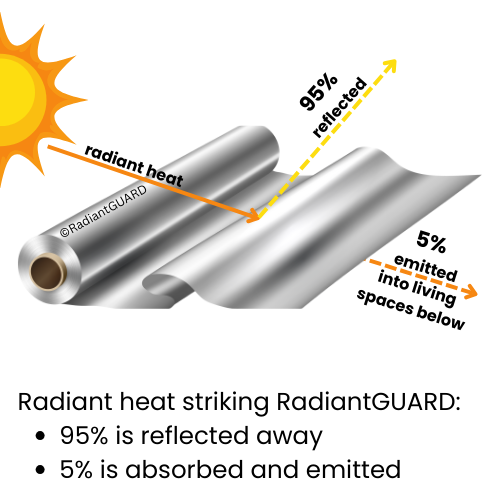
Because radiant barriers redirect radiant heat back through the roof, it's logical to think your roof will get hotter and damage your shingles or void your shingle warranty.

But don't despair. While the shingles may increase in temperature by 2-5 degrees Fahrenheit, shingle temperatures commonly range between 160° and 190° F on a hot sunny day. This minimal increase of 2-5 degrees in temperature is well within the expected temperature ranges of manufactured roof shingles and does not accelerate shingle degradation.
Although roofing manufacturers were initially concerned about shingle failure in the years when radiant barriers were first used, it is no longer an issue. Roofing material warranties are not voided by the installation of radiant barriers.
Supporting Resources
- Reflective Insulation Manufacturers Association (RIMA) independent study - The Effect Of Radiant Barriers In An Attic Application On Exterior Roofing Materials – Technical Bulletin 103
- Florida Solar Energy Center (FSEC) - Radiant Barriers: A Question and Answer Primer (2002)>
Fun Fact
Without a radiant barrier in place, radiant heat energy from the sun passes through the roof and is absorbed by the insulation on the attic floor. As the sun sets and the attic temperature lowers to match the outdoor temperature, the attic insulation is still radiating the heat it has absorbed throughout the day.
In essence, attic floor insulation is similar to a hot piece of coal in your attic that is slowing emitting heat extending an increase in roof temperatures into the early evening than if a radiant barrier had been in place!
Visit RadiantGUARD.com for more information or contact us today toll free (866) 528-8412 for technical advice or to place an order for radiant barrier for your project.